Advanced Business English Japan 日本人のための上級ビジネス英語
-
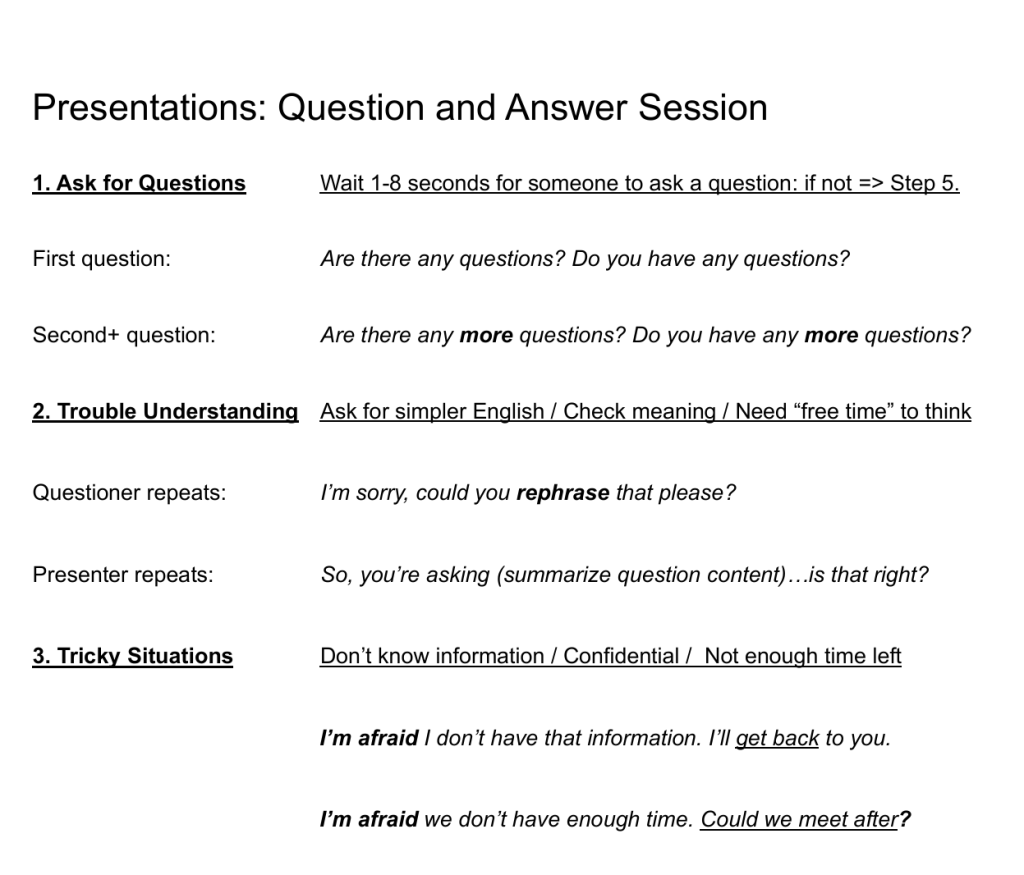
質疑応答に対応できるか不安である:セミナー受講生の質問
Feeling nervous about doing a Q&A session in a foreign language is normal. Worries about speaking well, listening correctly, and showing a level of expertise all play into a situation where we don’t have control over what questions listeners will ask. But there two ways we can significantly increase our control over the Q&A situation:…
-
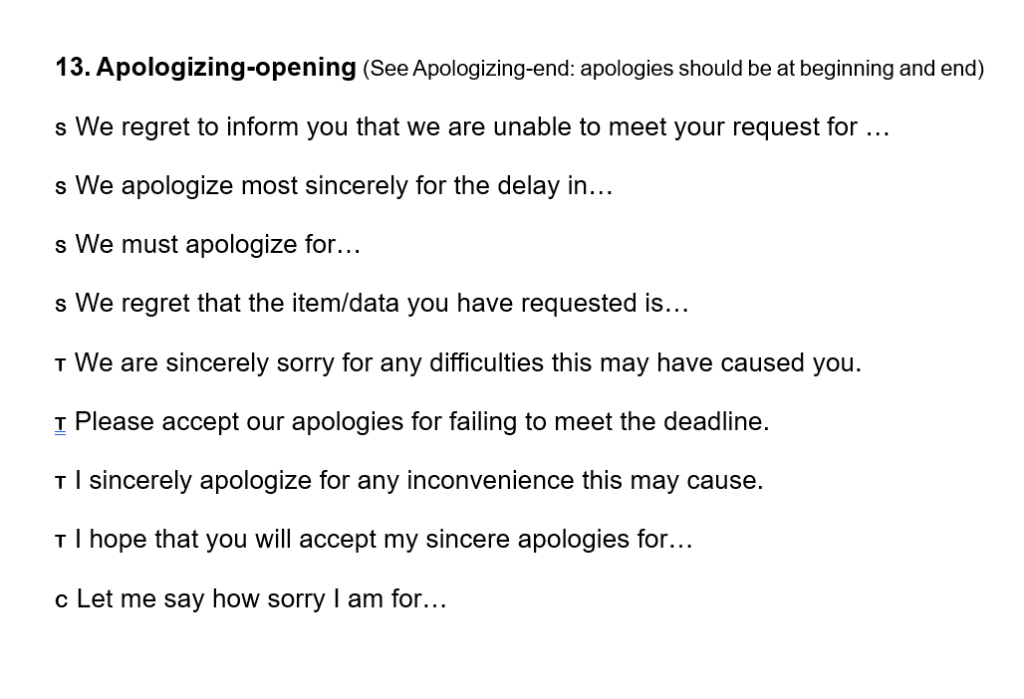
249 Business Email Phrases in 3 Polite Levels in 43 Situations
When writing a business email, do you worry about whether your English is polite enough for your reader? This collection of email phrases, arranged in three different polite levels, will help you choose the most suitable phrases for example, when writing disagreements, apologies, complaints, and warnings. Please feel free to download this document to help…
-
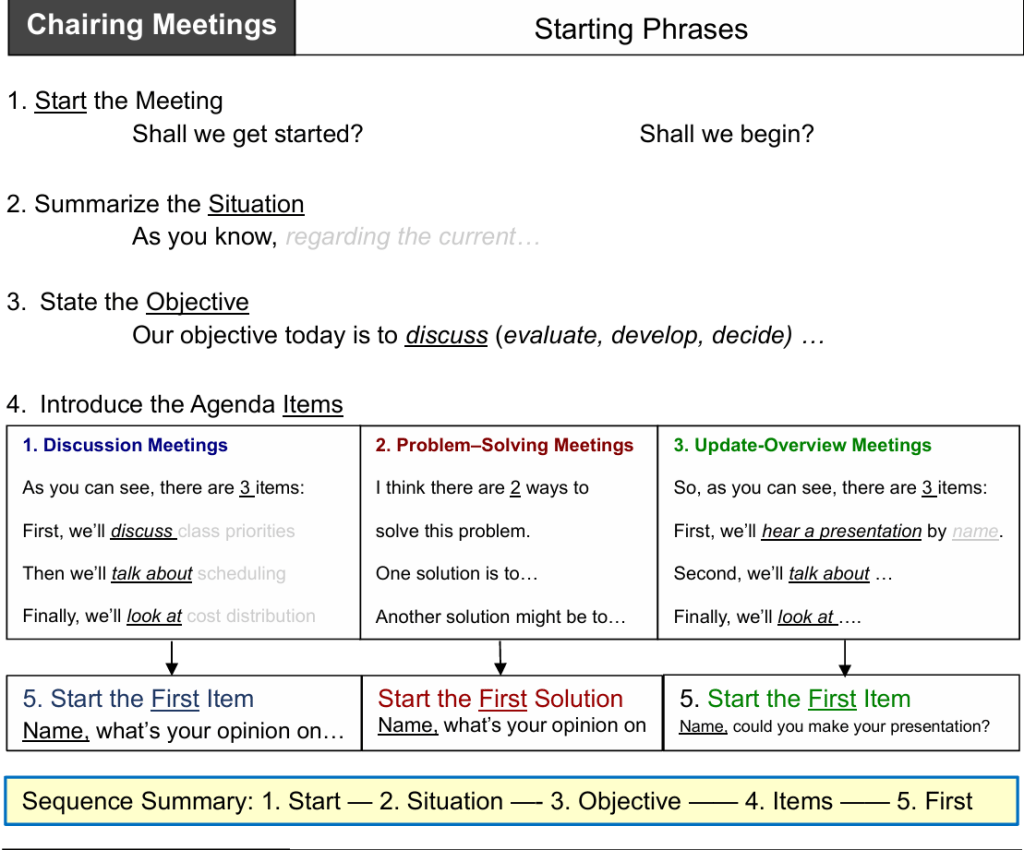
Leading / Chairing Meetings – Starting and Ending
This one-page Cunning Paper shows the standard international phrases for starting and ending meetings. Each section has 5 steps that are summarized in the yellow boxes at the bottom of the section. In the fourth step of the Starting section, there are separate phrases for three styles of meetings: discussion, problem-solving, and update-overview meetings. Please…
-
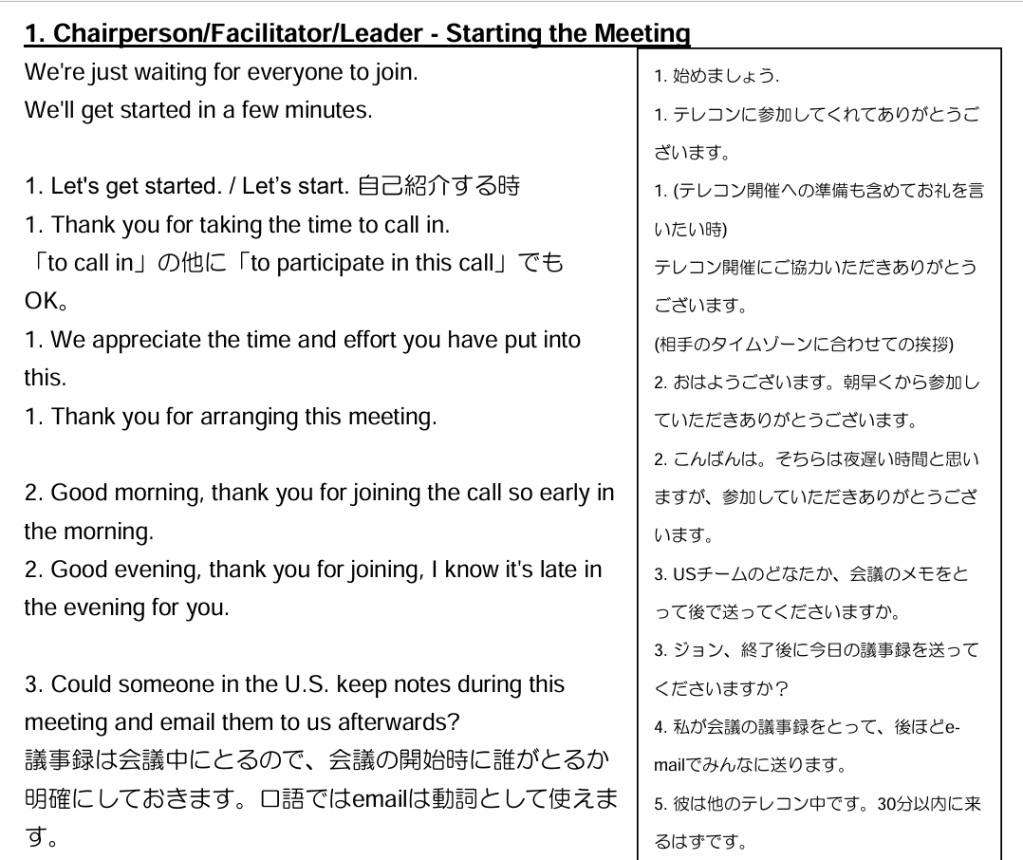
English/Japanese Meeting Phrase List-Start to Finish
Before you attend your next English meeting, this English/Japanese Meeting Phrase list is a great way to warm up/activate/recall your meeting English! For people that have to chair meetings, this list includes many useful phrases. Please feel free to download it for your next meeting.
-
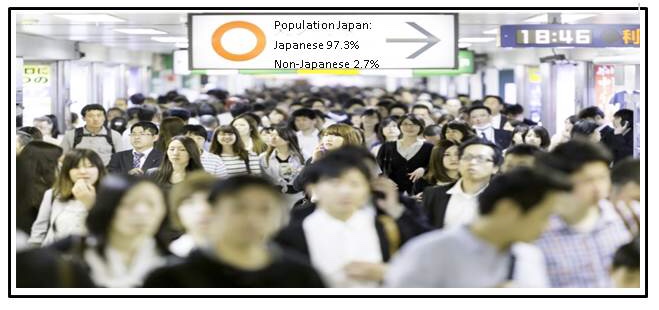
Why Japanese Hesitate to Speak English
Twenty years ago when I began teaching English in Japan, many companies needed just a few English speakers to take care of their business dealings overseas. These people were super students: naturally talented in learning languages and motivated by career opportunities to develop their English. (Japanese translation below) Since then however, companies have slowly come…
-

Listeners Pay Attention in Exchange for Information
When we start a conversation, we enter into an unspoken contract to politely wait for the other speaker to finish their turn before we say something. Although a presenter’s speaking turn is much longer and the listeners’ listening turn is much longer, presentations have the same unspoken contract: the listeners agree to listen quietly and…
-
Balancing Politeness and Power
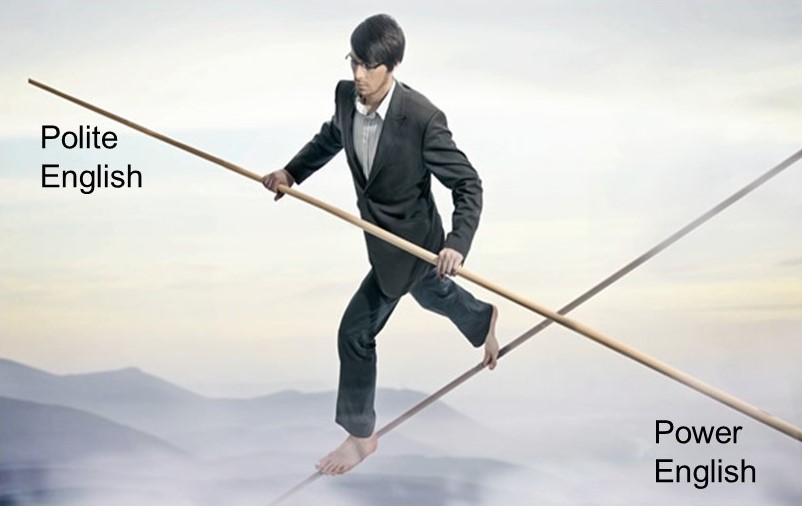
Most Japanese students focus on what English words and phrases should be spoken in international business. But I think students should also focus on how they speak. This is because speaking too strongly may create a difficult working atmosphere or even damage relationships. But speaking too weakly may lead listeners to assume a student does not…
-
You Need a Contents Page!
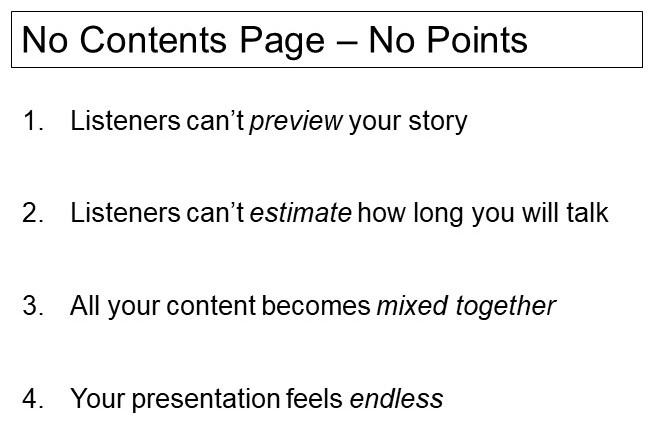
I think everyone has taken a day trip to somewhere new and thought, “It is a long way from home”, but when returning home feel, “It is actually not very far.” The distance doesn’t change; the feeling of time changes. This is because on the return trip we already know roughly how far it is…
-

Keeping Listeners’ Attention in Presentations
When you can see that listeners are not paying attention to your presentation, it feels terrible. Your chance to make an impression has vanished. So, how can you catch and hold listeners’ attention? Of course you need good material, an easy-to-follow structure and attractive slides, but that’s not enough either: what you really need is…
-
Learn How to Disagree Skillfully and Confidently
Disagreeing in a foreign language is full of risks: you can very easily be too polite, too casual, too direct, or too vague. (Japanese translation below) From the words you use, you can give your listeners the wrong impression about you yourself: disagreeing “too politely” might make you seem anxious about confrontation — and they…
Got any book recommendations?
 Advanced Business English Japan